Showing posts with label Orthodox Church History. Show all posts

Friday, July 21, 2017

The Addis Ababa Massacre by Italian Fascism

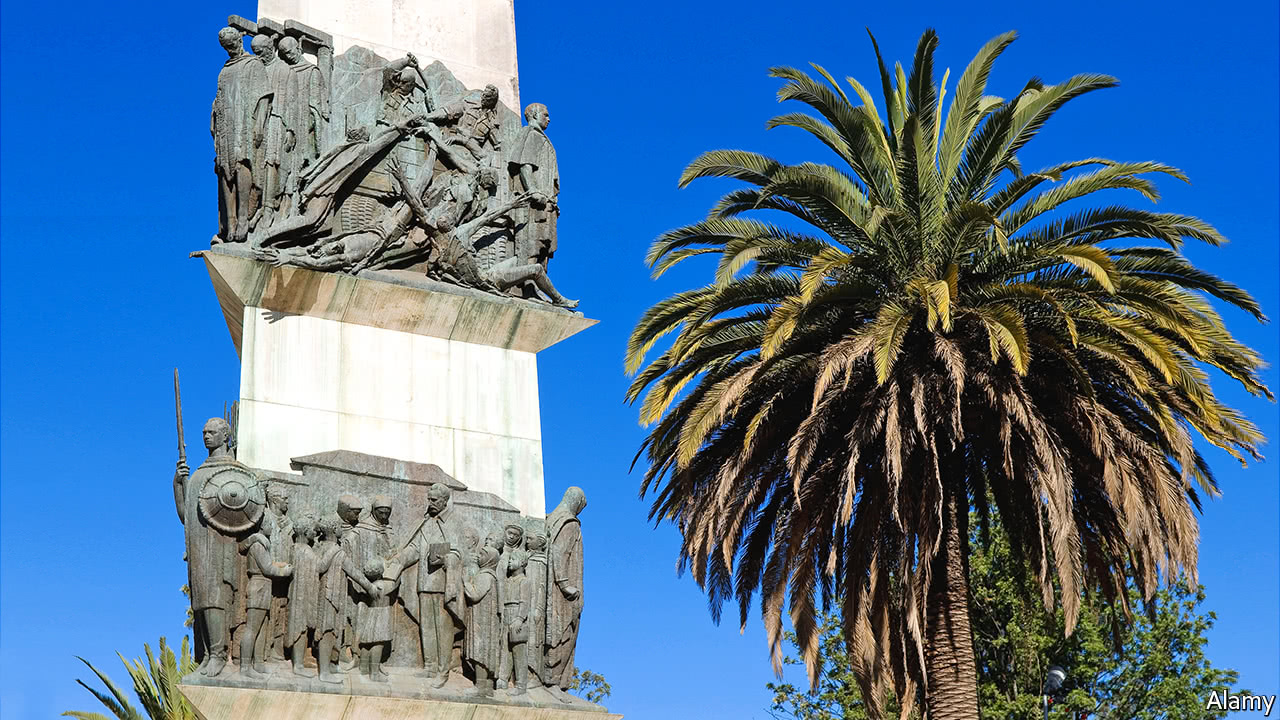
The monument of marythrs of the massacre

The Addis Ababa Massacre: Italy’s National Shame. By Ian Campbell. Hurst; 478 pages; £30. To be published in America by Oxford University Press in August.
NEAR the village of Affile, on a picturesque hillside east of Rome, stands a monument, unveiled in 2012 and built with public funds, to Rodolfo Graziani, one of Mussolini’s most brilliant generals. He was a key figure in Italy’s brutal campaigns in Africa in the decade before the second world war.
Inside a roundabout in Addis Ababa lies another monument. This giant obelisk, perhaps the Ethiopian capital’s finest piece of public art, was donated by Josip Tito, then president of Yugoslavia, in 1955. Six bronze reliefs depict a massacre, the worst in Ethiopian history, carried out by Italian forces during the occupation of 1936-41 while Graziani was viceroy of Italy’s new colony. According to the Ethiopian government, some 30,000 Ethiopians died during the campaign of terror in February 1937.
Official Italian estimates usually number between 600 and 2,000, but they are certainly much too low. The most plausible figure, argues Ian Campbell in the first comprehensive account of the massacre, may be 20,000. In Italy Graziani’s great crime is seen as little more than a typical European colonial atrocity—no worse than the British at Amritsar, for instance, where 1,000 people (according to India’s count) were slaughtered in 1919.
But, as Mr Campbell’s meticulous work makes plain, this was no typical colonial atrocity. After a failed attempt on Graziani’s life, the Italians’ bloody revenge lasted three days. Led by the local “Blackshirts”—Mussolini’s paramilitaries, officially granted carta bianca—regular soldiers, carabinieri and perhaps more than half of Addis Ababa’s Italian civilians took part. In this ghoulish massacre, witnesses reported crushed babies, disembowelled pregnant women and the burning of entire families.
Mr Campbell argues that this was a methodical effort to wipe out Ethiopian resistance to Italian rule, more like later Nazi war crimes than earlier colonial massacres. He charges both Graziani and the local Fascist Party leader, Guido Cortese, with personal responsibility. Though unconscious when the killing began, Graziani took control of the subsequent reprisal executions, aimed in particular at eliminating the Ethiopian nobility and intelligentsia.
Graziani was never prosecuted for crimes in Africa, though he was convicted for collaboration with the Nazis and briefly imprisoned. Britain, wary of setting awkward precedents, played an outsized role in sheltering Italians with blood on their hands. Mr Campbell cites a telegram written by Winston Churchill to his ambassador in Rome in 1944, instructing him to protect Marshal Badoglio, Italian commander of the Ethiopian northern front, who used poison gas, and is considered the top war criminal by Ethiopia.
Italy was never forced to reckon with Fascism as Germany was with Nazism. Few post-war Italian historians ever tackled the massacre. Those that did were often denounced as unpatriotic. Angelo Del Boca, writing in the 1960s, was accused by the Italian army of being a “liar” for his research on Graziani’s crimes. When “Lion of the Desert”—a film depicting his actions in Libya—was released in 1981, it was soon banned, for damaging the honour of the Italian army. To this day Italian schoolchildren are not taught about the Addis Ababa massacre. Graziani is little known; his sins even less so. Mr Campbell’s book will be welcomed by the Ethiopian government, which has long argued that its citizens deserve an apology.
Source: The Economist at link https://www.economist.com/news/books-and-arts/21725277-italians-it-was-garden-variety-colonial-atrocity-ethiopians-it-was-modern


Tuesday, July 7, 2015

ETHIOPIA IS ELECTED AS WORLD BEST TOURIST DESTINATION FOR 2015

On June 25, 2015 the General Assembly of the European Council on Tourism and Trade (ECTT), has taken under consideration the list of candidates for WORLD BEST TOURIST  DESTINATION for 2015.
Academician Dr. Mircea Constantinescu, Director of European Tourism Academy presented the list of candidates and the list of reports and accompanying reports for each of the 31  countries registered candidatures.
Ethiopian tourists site
Abune Yemata Guh of Tigiray Region (Source:-Embassy of UK in Ethiopia Tweeting)
 Professor Dr. Mircea Constantinescu presented also the figures regarding previous award winner for 2014-The Republic of Zimbabwe who become the most sought after destination  and the number one country in Africa, in term of tourism growth for last year.


Lao PDR- 2013 winner of WORLD BEST TOURIST DESTINATION- also crossed the 3 million tourist bench mark, surpassing all the countries in the region in terms of tourism,  concluded Academician Mircea Constantinescu.

Afterword, the debate on the WORLD BEST TOURIST DESTINATION FOR 2015 started at the indication of ECTT President-Professor Dr. Anton Caragea. On the debate for  the WORLD BEST TOURIST DESTINATION AWARD FOR 2015, Professor Dr. Anton Caragea, President of European Council on Tourism and Trade (ECTT) presented a report  titled: ETHIOPIA : THE PERFECT CULTURAL DESTINATION; THE LAND CHOSEN BY GOD !

He proposed ETHIOPIA as the winner of WORLD BEST TOURIST DESTINATION FOR 2015 and as receiver of the FAVORITE CULTURAL DESTINATION distinction for 2015.

The report noted the reasons for awarding WORLD BEST TOURIST DESTINATION FOR 2015 PRIZE to ETHIOPIA:

1. The excellent preservation of humanity landmarks such as: ruins of the city of Aksum- the heart of ancient Ethiopia, Fasil Ghebbi- the residence of the Ethiopian emperors during  the 16th and 17th century, Harar Jugol- 82 mosques, 102 shrines, and unique interior design in the townhouses, Lalibela- holy site encompassing eleven medieval stone carved churches from the 13th century, Konso Cultural Landscape (containing 55 kilometers of stonewalled terraces and fortified settlements), Lower Valley of the Awash-where humanity made his first steps and where was found the Eva of all mankind-Lucy fossil’s, Lower Valley of the Omo also containing fragments pertaining to early humanity development and the fossils of Homo Gracilis.  
All this sites where recognized as being of world significance and registered as UNESCO World heritage monuments.


2. The rich cultural and historical legacy of Ethiopia is not confined to the previous  presented list: new prominent landmarks are added such as: Sheik Hussein Religious, Cultural and Historical Site, Melka Kunture- Paleolithic site in the upper Awash Valley, Gedeo Cultural and Natural Landscape, Bale Mountains National Park, Sof Omar Cave- the longest cave in Ethiopia at 15.1 kilometres long; and the longest system of caves in Africa- sacred for Islam and for local Oromo population.

In order to fully grasp the natural potential of Ethiopia natural parks and natural reservations we must look at the potential of Simien National Park garnering mountain peaks, deep valleys, and sharp precipices dropping about 1,500 m.


3.  The ambitious plan drafted by the Government of Ethiopia under the name of Poverty Reduction Strategy Paper (PRSP). Tourism as a tool for poverty eradication, for local  community development and for economic independence is a successful strategy carved by H.E. Prime Minister Hailemariam Desalegn.

Community based, social oriented tourism, promoted by Prime Minister Hailemariam Desalegn, is a perfect way of sharing revenue, growing income and supporting marginal and rural communities development.

The way in which social-tourism has become the base for local economic development,  providing benefits to communities, makes social-friendly tourism, the lesson that today-the REPUBLIC OF ETHIOPIA is offering to the world.

4. Giving tourists access to outstanding and pristine nature and the opportunity to explore nature, to contribute to ecological preservation, and the opportunity to visit extraordinary places.

All these regions and national parks, are a model of achieving ecological and green tourism that must be recognized throughout the world.

5. The ongoing development and protection of cultural, religious and historical shrines of the Republic of ETHIOPIA , the transformation of Lalibela into a historical and spiritual center,  offering to the visitors a glimpse into rich culture and heritage of peoples of ETHIOPIA.

Ethiopian tourists site
One of Lalibela's famous stone-cut churches (Source:-Embassy of UK in Ethiopia Tweeting)
 

Lalibela is the land of faith and miracles that must be presented to the world as a center of religious and faith significance equal to Jerusalem only in the world.

Lalibela must be the center of religious pilgrimage and cultural tourism offering to world  tourists the complex healing experience of cultural legacy, religious special atmosphere and faith imbued air.

6. The preservation of outstanding historical and cultural heritage in the form of the former capital of the Kingdom of Ethiopia, the Gondar cultural complex , an ample palatial complex from the 13th Century, offering a pungent presence of one of the African greatest empire.

7. Today, Gondar castle complex offers tourists bound for Ethiopia an open air museum with a rare collection of historical and archaeological treasures that educate and enrich the world.

8. The REPUBLIC OF ETHIOPIA is also a perfect center for safari and adventure tourism, offering large areas suitable for this special kind of tourism, and the necessary infrastructure to welcome the adventure seeker, its safety and peace, makes the country, one of the world’s top adventure destinations.

9. Keeping alive community blending traditions, allows tourists and visitors to be part of the ETHIOPIA unique people’s ethnic fabric, which offers the possibility for an enriching cultural experience, are all achievements that make the REPUBLIC OF ETHIOPIA a perfect cultural class destination.

Mr. Mihai Prundianu, Chairman of the Trade Mission of the ECTT, marked the necessity that, out of the regular order, to have another African country declared as WORLD BEST TOURIST DESTINATION in sign of continuity for last year and as appreciation mark for President Robert Gabriel Mugabe , the current President of African Union and Zimbabwe Tourism Minister-Walter Mzembi.

This year we have to select another African country to mark Europe and world solidarity with Africa and Africa`s Union President Robert Mugabe.

It is appropriate for Europe to express its commitment to, and appreciation for, Africa by  crowning ETHIOPIA as THE FAVORITE CULTURAL DESTINATION AND WORLD BEST TOURIST DESTINATION FOR 2015 stated Chairman Mihai Prundianu.

Senator Ionel Agrigoroaiei, Director of European Parliamentary Committee in the European Council on Tourism and Trade and Senator of Romanian Parliament stated the opinion of all present at ECTT conference and declared that the REPUBLIC OF ETHIOPIA is the deserving candidate, with a perfect record of promoting social-friendly tourism, ecological and poverty reduction strategy based on tourism, and asking for a unanimous vote in favor of the REPUBLIC OF ETHIOPIA.

President Dr. Anton Caragea asked for a vote and European Council on Tourism and Trade decided, unanimously, to award WORLD BEST TOURIST DESTINATION FOR 2015 TITLE TO REPUBLIC OF ETHIOPIA and to declare REPUBLIC OF ETHIOPIA- THE FAVORITE CULTURAL DESTINATION in 2015.
Hamer tribeswomen's brightly coloured dresses

The meeting was also presented with the Official Invitation, from the Prime Minister Hailemariam Desalegn of the REPUBLIC OF ETHIOPIA via the Minister of Culture and  Tourism Mr. Amin Abdulkadir, for a  delegation of high ranking officials of the European Council on Tourism and Trade, to present the WORLD BEST TOURIST DESTINATION AWARD in Addis Ababa, in person, to His Excellency Prime Minister of  REPUBLIC OF ETHIOPIA- HAILEMARIAM DESALEGN, European Academician and  outstanding personality in world tourism, today.

Concluding the debate, Professor Anton Caragea, President of the European Council on Tourism and Trade marked the importance of the moment the most impressive world tourism prize was entrusted to ETHIOPIA.

The safety of the country and the huge hospitality potential of Ethiopia is revealed by the acceptance of the invitation for a familiarization visit of high ranking members of European Council on Tourism and Trade to the ETHIOPIA.

Ethiopia is from today a perfect, safe and outstanding place to visit, the countries gates are opened and all world tourism experts expressed their confidence in the potential and future of tourism in ETHIOPIA, concluded Professor Anton Caragea, President of the European Council on Tourism and Trade.


Tuesday, June 2, 2015

Divine Ethiopia

Its landscapes are biblical and its rituals haven’t changed for centuries. But amid the cave churches and primitive tribes are new lodges – and helicopters (or donkeys) to reach them


By: Stanley Stewart from Telegraph.com

Sunday Service in the church of Abuna Yemata Guh  requires nerves of steel. Yet they assured me the congregations were good. “Don’t worry,” the priest fussed. “Pregnant women are attending, old people are attending, tiny children are attending.”

I wasn’t sure I would be attending. I was standing on a narrow ledge. Below me was a 1,000ft drop to the valley floor. Somewhere above me, beyond a sheer polished cliff, was the church. My legs felt like water. I was sweating in places I had never sweated before. At that moment, the eye of a needle seemed easier to negotiate. “You must try,” the priest whispered. “God is watching.”

There are moments when Ethiopia seems to belong to an atlas of the imagination – part legend, part fairy-tale, part Old Testament book, part pulling your leg. In this land of wonders there are medieval castles of a black Camelot, monasteries among Middle Earth peaks accessible only by rope and chains, the ruined palace of the Queen of Sheba and the original Ten Commandments in a sealed box guarded by mute monks with killer instincts.

In the northern highlands priests with white robes and shepherds’ crooks appear to have stepped out of a Biblical painting. In the southern river valleys bare-breasted tribeswomen, who scar their torsos for erotic effect and insert plates the size of table mats in their lower lips, seemed to have emerged from a National Geographic magazine circa 1930. Ethiopia “resembles no other country in Africa”, wrote the great explorer Wilfred Thesiger, “or anywhere else.”

Exploring Ethiopia by helicopter
 Its isolation is legendary. Not only was Ethiopia never colonised, but it also inflicted the greatest defeat on a European army in the history of the continent – at the Battle of Adwa in 1896. It was only the Italians, of course, but it still counts. Ethiopians were “forgetful of the world”, Edward Gibbon wrote, “by whom they were forgotten”. For long medieval centuries Europeans believed that Ethiopia was home to Prester John, legendary Christian ruler, descendant of one of the three Magi, keeper of the Fountain of Youth, protector of the Holy Grail, and all-round good guy who would one day rescue the Holy Land from the Muslims.

Crossing the threshold of the church of Medhane Alem in Lalibela , I seemed to step back a thousand years. Cut by shafts of dusty light from high windows, the interior gloom was scented with frankincense. I came round a pillar to find a dozen priests leaning on their croziers, chanting in Ge’ez , a language no one has spoken since the Middle Ages. The sound was a curious cross between Gregorian plainsong and a nasal Arabic call to prayer. These were among the earliest Christian rites, unchanged for well over 1,500 years (for more than 4,000 years, the writter assumes ages of Christianity after King Ezana only) . Worshippers sat on the ground against the bare stone walls, wearing clothes that wouldn’t have been out of place in the Book of Genesis. They gazed mournfully at a pair of threadbare theatrical curtains. Beyond the curtains lay the inner sanctum, the Holy of Holies , which held the Ark of the Covenant .

For a country with so much to offer, it is surprising to find tourism in Ethiopia still in its infancy. The war and famine of the 1970s and 80s, though now almost ancient history, may be partly responsible. But a deeper issue may be a feature of the national character – a lack of entrepreneurial urgency. Ethiopia may not be big on stylish boutiques hotels, littered with objets d’art and architectural magazines, but it is a delightfully old-fashioned place, with ravishing landscapes, sleepy villages and friendly, unhurried people.

It is difficult to pick a single destination from Ethiopia’s treasure chest, but first-time visitors shouldn’t miss Lalibela and its remarkable churches, all below ground level, and all carved from the rock as entire buildings with surrounding courtyards, exterior walls and roofs. Historians are uncertain about much of their history but Ethiopians have a handle on it. A celestial team of angels came in at night to help out after the terrestrial workforce had clocked off. 

There are always two histories in Ethiopia: the history of historians, sometimes a trifle vague, often tentative; and the history of Ethiopians, a people’s history, confident, detailed, splendid, often fantastical. The two rarely coincide. Historians are still wringing their hands about the mysteries of Aksum  in Tigray  in the north, with its colossal stelae, its underground tombs, its ruined palaces and its possible connections to the Queen of Sheba. For a thousand years, until about AD 700, it was a dominant power in the region, “the last of the great civilisations of antiquity”, according to Neville Chittick , the archaeologist, “to be revealed to modern knowledge”.

Fortunately, the Ethiopians are on hand to fill in most of the historical blanks. The city was founded, they say, by the great-grandson of Noah. For 400 years it was ruled by a serpent who enjoyed a diet of milk and virgins. Historians may be divided about the Queen of Sheba but Ethiopians know she set off from here to Jerusalem with 797 camels and lot of rather racy lingerie to seduce King Solomon. Historians carelessly lost track of the Ten Commandments not long after Moses came down from Mount Sinai. Ethiopians have the originals under lock and key in a chapel in Aksum, guarded by those mute monks, assigned to kill all intruders.

Crossing the threshold of the church of Medhane Alem in Lalibela , I seemed to step back a thousand years. Cut by shafts of dusty light from high windows, the interior gloom was scented with frankincense. I came round a pillar to find a dozen priests leaning on their croziers, chanting in Ge’ez , a language no one has spoken since the Middle Ages. The sound was a curious cross between Gregorian plainsong and a nasal Arabic call to prayer. These were among the earliest Christian rites, unchanged for well over 1,500 years. Worshippers sat on the ground against the bare stone walls, wearing clothes that wouldn’t have been out of place in the Book of Genesis. They gazed mournfully at a pair of threadbare theatrical curtains. Beyond the curtains lay the inner sanctum, the Holy of Holies , which held the Ark of the Covenant .

The landscapes of Tigray are appropriately Biblical. It is a world where everything comes and goes by foot or hoof, a world of timeless villages perched beneath vast mesas and plunging ravines, a world where it is possible to imagine startling young men turning water into wine. With my bag loaded onto a Palm Sunday donkey, I set off on a three-day walk down the Erar Valley . I strolled through the latticed shade of eucalyptus trees, past scented banks of sage and mint, past stands of prickly pear and neatly ploughed fields framed by irrigation channels. I rested under the shade of vast fig trees beneath colonies of hornbills, bee-eaters and firefinches. A man in a white robe was winnowing wheat, tossing yellow forkfuls into the air, allowing the wind to take the chaff. Children ghosted out of orchards with home-made toys: a ball of goatskin and twine, a doll of twigs and wool. In the late morning I passed people coming back from the weekly market, two hours’ walk away. They were carrying some of life’s essentials: bags of rice, new sickles, bolts of bright cloth, blocks of salt that had come up from the Danakil Desert  by camel caravan. Everyone stopped to greet me with handshakes and smiles.

For a country with so much to offer, it is surprising to find tourism in Ethiopia still in its infancy. The war and famine of the 1970s and 80s, though now almost ancient history, may be partly responsible. But a deeper issue may be a feature of the national character – a lack of entrepreneurial urgency. Ethiopia may not be big on stylish boutiques hotels, littered with objets d’art and architectural magazines, but it is a delightfully old-fashioned place, with ravishing landscapes, sleepy villages and friendly, unhurried people.
The Church of St George in Lalibela

It is difficult to pick a single destination from Ethiopia’s treasure chest, but first-time visitors shouldn’t miss Lalibela and its remarkable churches, all below ground level, and all carved from the rock as entire buildings with surrounding courtyards, exterior walls and roofs. Historians are uncertain about much of their history but Ethiopians have a handle on it. A celestial team of angels came in at night to help out after the terrestrial workforce had clocked off.

The trek was part of a new community project. The guides and the transport – my faithful donkey – were provided by local villagers who, with the help of NGOs, have also built hedamos,  or guesthouses. There is something special about these Tigrayan guesthouses – their location. Tigray is a mountainous region, characterised by ambas: dramatic, sheer-sided, flat-topped mountains. Most of the treks are easygoing, following the valley floors through pastoral landscapes. But towards the end of each day I started to climb with the guide, following steep paths along narrow rising ledges, to the summits of these anvil-headed ambas.
Tigray
Tigray

On the top, we emerged into a whole new world of luminous light and distant views. Here we found our home for the night, the community hedamo, perched in splendid isolation on the lip of a colossal escarpment, perhaps 3,000ft above the landscapes below. The views were breathtaking. We looked straight down, past circling eagles, to the world we had just left – ploughed fields, stone tukuls, eddying sheep, tiny white-robed figures trailing along dust lanes. Farther away, rivers carved swathes of ancient earth, canyons yawned open and valleys tumbled into one another. Farther still, mountains patrolled the horizons. With a slight turn of the head, I took in hundreds of miles.

Hamer tribeswomen's brightly coloured dresses
At Erar and Shimbrety , the stone-built guesthouses, with their little courtyards and roof terraces, were comfortable but basic. Village women prepared delicious Ethiopian dinners that made little concession to Western tastes. The loos, Western-style, were in spartan huts. Washing facilities were wooden buckets of warm water. There was no electricity, just lanterns and candles. Yet these felt like the most luxurious places I had ever stayed. It was the luxury of unique experience, of meeting local villagers on their own ground, of engaging with an ancient way of life, of being far from tourism’s well-trodden trails. And it was the luxury of spectacular location. I have never been anywhere with more stunning views. 
At Erar, night came with equatorial suddenness. A troop of gelada baboons , 30 or so strong, made their way home across the summit of the amba after a day’s feeding. They climbed down over the edge of the escarpment to precipitous ledges where they would be safe from leopards. The sun set over distant, mythical-looking mountains. When I turned round, a fat full moon was rising directly behind me. The world seemed to be in perfect balance.

Tigray, too, has its remarkable buildings. Scattered across these mountains are more than 120 ancient churches, most excavated in remote rock-faces like caves. Until the 1960s they were virtually unknown to the outside world. Older than the churches at Lalibela, they are little understood by historians. Which means we are left with the fabulous oral history of the Ethiopians.

Abuna Yemata Guh  is one of the more challenging churches to reach. A rock butte soared above us; I was getting a crick in my neck and a serious case of vertigo just looking at it. I imagined, as with the sheer-sided ambas, that there would be some circuitous path, some scrambling route to the top. It was only when we had trekked up from the valley floor and gained the narrow ledge that I began to realise I was going to have to climb a cliff-face, in fact several cliff-faces, to get to church.

A priest was waiting on the ledge, with the kind of morbid face usually reserved for the last rites. He advised me to remove my shoes and socks; bare feet would give me a better grip. It turned out that two men, who I had assumed to be casual passers-by, were in fact there to try to prevent me from plummeting to my death.
We started to climb. My two assistants, one above and one below, guided me to precarious foot- and hand-holds. This was rock climbing without the ropes, the safety harness or the Chris Bonington confidence. Spread-eagled on the cliff-face, clinging to the minor indentations that passed for handholds, I felt a trifle out of my comfort zone. Had I know what was in for, I would probably not have chosen Abuna Yemata Guh for a casual visit.

But once I reached it, I was thrilled I had. The climb might be hair-raising but the church is unmissable.

At the top of the cliff, not daring to look down, I gazed ahead, just in time to see a side-chamber full of bones – the priest insisted they were deceased clerics, not fallen visitors. Then I shuffled along a narrow ledge and came to a cave-like opening. The priest wrestled with a key the size of a cricket bat. A door opened and I stepped into the gloom of the tiny church, hardly larger than a modest drawing room. As my eyes adjusted, I became aware of faces round the walls. Then the priest lit a torch and held it aloft. Suddenly the dark walls were alive with figures: apostles and saints, prophets and the archangels, Mary and the infant Christ. The famous Nine Saints from the Levant , who had brought Christianity to Ethiopia in the fifth century, were here, as was Saint Yared,  who wrote so many of the early Ethiopian chants. The builder of this cliff church was here, Abu Yemata, mounted on a horse and accompanied by his nephew Benjamin, who had painted the murals.
The priest, a humble villager, told me the stories that swarmed across these walls. He told the stories as they had been told to him, as they had been handed down from one priest to the next from the earliest days of the Christian era. He referred to the apostles as if they were old friends. He talked of the saints as if they were men who had known his grandparents. He told me about the groom who had neglected Yemata’s horse. Yemata had turned him into a weasel. There, he said, bringing his torch near to the wall, illuminating a small weasel-headed man beneath the horse. 
I asked why the church was here, so difficult to access, so high in these cliffs. The priest said it was for reasons of safety – it may well have been built when Christianity was still vulnerable. Then he added: “We are closer to God here, away from our world, and closer to His.” He lifted an ancient text enclosed in an ox-hide satchel from a nail on the wall. He asked if he should say prayers. I said I thought a few words might be a good idea. After all, I still had to get down that cliff-face.

Journeys by Design (01273 623790; journeysbydesign.com) can organise a two-week private journey to Ethiopia, including Lalibela, a three-night trek through northern Tigray staying in Gheralta Lodge, and three nights at Bale Mountain Lodge, from £6,200 per person, excluding international flights. A seven-night helicopter safari to include all of the above, plus a flight to 300ft below sea level in the Danakil Depression, costs from £19,810 per person, based on four sharing a Eurocopter B4.

This feature appears in the summer issue of Ultratravel, the Telegraph's luxury-travel magazine, available on Saturday May 30 


Tuesday, December 24, 2013

Ethiopia, the Land of Sheba

By Linus Wamanya

Ethiopia never ceases to amaze and enchant guests. While there I was enmeshed in its wealth of history. I was never braced for the contrasts and surprises in the remote and wild places. These sandy brown hosts are such a friendly people who are descendants from some of the world's oldest civilizations.
You have perhaps heard of the fabled Queen of Sheba, the Biblical home of the Ark of the Covenant, the birthplace of coffee. As if that was not enough, “Lucy” the world's oldest known almost-complete hominid skeleton, more than three million years old, was discovered in this part of the Horn Of Africa had its roots there.
Covenant Church

To any visitor, the Ethiopia menu of attractions is lengthy and diverse. There is the Historic Route which includes the ancient town of Axum. Then there is the amazing piece of art obelisks. This is crowned by Christian festivals and relics, including the Ark of the Covenant; Gondar. I am yet to find out how ancient Ethiopians built these magnificient castles and palaces. There is Lalibela, with its remarkable rock-hewn Churches. This is contrasted with, Negash, one of the earliest holy Muslim centers dating to the Prophet Muhammad Era. To lend it legitimacy, in Islam, is the Negash Amedin Mesgid, the walled Muslim city of Harar and Lega Oda, near Dire Dawa where you can see vibrant cave paintings considered to be thousands of years old.
“This place was declared free from Jihad by prophet Mohamed,” Methenik, a guide told me. “Here a day has twelve hours. A day begins with the sun coming out and ends with it going down.”
I gasped for breath on seeing Lake Tana, the source of the Blue Nile. It is the largest lake there boasting with 37 islands. The Monasteries like Kibran Gebriel and Kidanemhiret boasting settlements dating far back to 14th century are also of interest

Axum Obliques: The broken old oblique 
 Legend has it that Emperor Menelik I, the son of the Queen of Sheba and king Solomon, brought the Ark of the Covenant from Jerusalem to Axum, where he settled and established one of the world’s longest known, uninterrupted monarchical dynasties.
This is only one example of Ethiopia’s magnificent history, which encompasses legend and tradition, mystery and fact, from a powerful and religious ancient civilization. The well -trodden path through Ethiopia’s famous and fascinating historic places takes you through a scenically magnificent world of fairy -tale names, such as Lalibela, Gondar and Bahar Dar.
2. The rock-hewn churches of Lalibela (North Wollo Zone) this is called the african petro with credible rock carved churches made in the 13th century by king Lalibela
 Lalibela, a 45 minutes flight with Ethiopian airlines from Addis Ababa, is internationally-renowned for its rock-hewn churches which are sometimes called the "Eighth Wonder of the World". Physically prised from the rock in which they stand, these monolithic churches were originally thought to have been built in the 12th century during the reign of King Lalibela. It took me maximum of four hours to tour all the eleven churches assembled in three groupings
For sure Lalibela stands out to be the a must visit destination while in Ethiopia.

Njera and wot; Ethiopia's traditional dish
Lake Tana is the source of the Blue Nile and the biggest lake in Ethiopia having 30 islands.  There are monasteries constructed on 27 of them in the 13th – 17th century AC containing unique old paintings which depict the churches and biblical history.
The churches were used as treasure houses by the emperors of that period. There are still some collections of this antique treasure to be admired.

The rock-hewn churches of Lalibela - Jerusalem of Africa

Gonder: the Camelot of Africa
Gondar was the capital of Ethiopia in the 17th century with its notable medieval castles and churches.
The city’s unique imperial compound contains a number of castles built between 1632 – 1855 by different emperors who reigned during that period. These amazing castles, unlike the others in Africa, display richness in architecture which reveals the Axumite architecture and the influence of the Portuguese, the Arabian and the Indian.
Like Uganda, Ethiopia is home to a wealth of birds and animals. There are also the high, rugged, Simien Mountains in the north and the Bale Mountains in the southeast. They are endowed with unique wildlife, rich flora and ideal for nature walks.
This part of Africa has eleven national parks and four sanctuaries, where 277 species of wildlife and more than 850 species of birds fly. The Simien Mountains National Park is registered by UNESCO as a world heritage site and is home to three of the endemic mammals, Walia Ibex, Gelada Baboon and Abyssinian Wolf. Ras Dashen, the fourth highest peak in Africa with an altitude of 4,620 meters, is also located within the National Park.
Other National Parks include Bale Mountains and Abijatta-Shalla in Oromia, Nech Sar, Mago and Omo National Parks in the south and Yangudi Rasa in Afar, Gambella National park in Gambella, as well as Awash in both Oromia and Afar Regions.
Comparably, Addis Ababa is a friendly and safe capital city. There are first-class hotels and restaurants, museums and palaces, and good shopping malls Mercato - Africa's largest open-air market. Ethiopia is a mosaic of people with more than 80 languages, different lifestyles, costumes and cultural dances.
Ethiopia has been called 'the land of a thousand smiles'. By the way if you are destined to Ethiopia go ready to eat Njera and wot and to drink strong coffee brews.

Ethiopian Fests
New Year’s Day September 11
To the religious calendar it is also the Feast of St John the Baptist. Here it is called Enkutatash, meaning the ‘gift of jewels’. When the famous Queen of sheba returned from her visit to King Solomon in Jerusalem, her chiefs welcomed her back by replenishing her treasury with jewels. The festival is marked by dancing and singing. The night before, people light fires outside their houses, and run around with flaming torches to welcome the New Year. Traditionally young girls would pick a special kind of grass, called engicha or enqwutatash, and would go round signing goodwill messages for the new-year. They present the grass to whomever they meet and would be given a modest gift in return.
MESKAL 27 September.
Celebrated in the country for over 1,600 years, this important feast commemorates the discovery of the cross upon which Jesus was crucified, by the Empress Helena, the mother of Constantine the Great.
The day before tall branches are tied together and yellow daisies, popularly called Meskal flowers, are placed at the top. During the night these branch are set ablaze to symbolise Empress Helena lighting incense and praying for help to find the Holy Sepulchre was after nobody would show her. Following the direction of the smoke, she dug and found three crosses, including the True cross. A part of the True Cross is said to be in the mountain monastery of Gishen Mariame located in the South Wollo administrative zone. The priests of Gishen safeguard a gold box containing a fragment of this cross.
During this time of year flowers bloom on mountains and plains and the meadows are yellow with the Meskal daisy. Dancing, feasting, merrymaking, bonfires and in the past even gun salutes mark the occasion.
The writer.

GENNA (ETHIOPIAN CHRISTMAS) 7th January
The Ethiopian Christmas, also called Lidet, is celebrated by all-night church services, with people moving from one church to another. Traditionally, young men played a game that is similar to hokey, called genna, on this day, giving the feast day the name. This celebration is unique to Lalibela and attracts many visitors.

Timket, Feast of Epiphany, is the greatest festival of the year. It is a three-day fest, beginning on the eve of Timket with colourful processions. The following morning, the great day itself, marks Christ’s baptism in the Feast of St Michael, the archangel, one of Ethiopia’s most popular saints. There are religious rites performed by the priests from the eve of the day.
The ordinary people prepare special beers, Tej and tella, bake special bread and slaughter sheep that have been fattened for the occasion. Children receive gifts and everyone turns out in new clothes. Visitors can observe the ceremonies in most parts of the country.

Monday, December 23, 2013

Research uncovers lost African school of painting


Scored lines behind the pink background were used to arrange the layout and text  


By Martin  Bailey – 22/12/13
Analysis of illuminated gospels suggests that first Christian manuscript art may have come from Ethiopia.

Evidence has emerged for a previously unknown school of painting in sub-Saharan Africa that may have been responsible for the earliest Christian paintings in manuscripts. New research suggests that illuminations in two Ethiopian gospels dating back 1,500 years were painted in the ancient kingdom of Aksum, and not in the Middle East, as previously believed.
These illustrations, which include a set of the Evangelists, are evidence of an Aksumite School of painting, says Jacques Mercier, a specialist in Ethiopian art at the Centre National de la Recherche Scientifique in Paris. Aksum lies in present-day Eritrea and northern Ethiopia. If Mercier’s theory is correct, it sheds new light on the development of early Christian art.
An early dating for these texts (known as the Garima Gospels, after the monastery that houses them) was first brought to international attention by The Art Newspaper, when we reported the existence of two bound Gospels with parchment leaves carbon-dated to between 330 and 650 (The Art Newspaper, June 2010, p46). They had been assumed to date to around 1100, since no earlier manuscript was believed to have survived in Ethiopia. A second set of small samples of parchment was recently dated by the University of Oxford’s Research Laboratory for Archaeology and the History of Art.
The results were announced last month at a conference in Oxford on the Garima Gospels, organised by the Ethiopian Heritage Fund. They confirm the previous results, with a date range of 390 to 570 for the first book of Gospels and 530 to 630 for the second. The middle dates from these two results average out at 530.
It has been assumed that the parchment was prepared and the illuminations created in the Middle East. The pages would then have been taken to Ethiopia, where the text was added in Ge’ez (the local language) by Ethiopian scribes. But Mercier has noticed that scored lines, added to help the scribes writing the text, were also used for the layout of the illuminations. Some of the 28 horizontal lines are visible behind the pink background of the Evangelist Luke, and the upper and lower decorated frames have been painted directly on top of the lines. Mercier argues that if the Ge’ez text was written in Ethiopia, as seems highly likely, then the illuminations must have been made there too. Theoretically, the images could have been painted by a Middle Eastern artist who had travelled 3,000km south, but Mercier argues that it is much more likely that they are the work of an Aksumite artist, copying earlier (lost) images made in the Middle East or Aksum.

Among the earliest works
As to the dating, 530 gives only a rough indication, but it does suggest that the Garima Gospels include some of the earliest Christian paintings (other than wall paintings). The earliest dated illuminated manuscript is the Rabbula Gospels, which was created in 586 in Beth Zagba, in modern-day Syria, and is now in the collection of the Laurentian Library in Florence. The Cotton Genesis (British Library), Vienna Genesis (Austrian National Library) and Rossano Gospels (Rossano cathedral, Italy) are likely to be slightly earlier. The oldest icons, now in St Catherine’s monastery in Sinai, date from the mid-sixth century.
The first volume of the Garima Gospels was conserved and rebound in 2006. Similar work, organised by the Ethiopian Heritage Fund, was carried out on the second volume this year.
The Orthodox monastery of Garima lies in northern Ethiopia, at an altitude of 7,000ft and hemmed in by rugged cliffs. It is a relatively humble complex of buildings, with 50 monks living in a few simple houses. There is a small treasury building, where the Gospels have been kept. Last year, a museum was set up in a converted building, with greater security and armed guards.
The monastery was founded in the sixth century by Abba Garima, but the area was occupied by Muslims from the ninth to the 14th centuries and the monastery would have been abandoned. It remains a mystery how the Garima Gospels were preserved, but they may have been hidden in a cave before being rediscovered centuries later.


Wednesday, November 13, 2013

ኢትዮጵያዊነት በዐረብ ሀገራት በዓይነ ቁራኛ የሚታየው ለምንድነው?


በተለያዩ የታሪክ አጋጣሚወች የተለያዩ ዓለማት ሰወች በኢትዮጵያዊነት ላይ ዘምተዋል፡፡ ኢትዮጵያዊነት ሁለት ዜግነት (ኤርትራና ኢትዮጵያ) በሚል እንዲታወቅ ተግተው ከሰሩት ሐገራት መካከል በቀዳሚነት ከፍተኛ ሚና የተጫወቱት የዐረብ ሀገራት ናቸው፡፡ የምዕራቡ ዓለም በደም የመነገድና ኢትዮጵያ የምትባል ሀገር ተዳክማ ስሟ ኮስሶ ለመመልከት የሚፈልጉ የጥፋት ክንዳቸውን በራሳችን ሀገር ውስጥ ኢትዮጵያዊ ተብለው ባደጉ ባንዳዎች አማካኝነት በሀገራችን በመዘርጋት ሀገራችንን ሲያሸብሩ፣ ሲከፋፍሉ፣ ሲመዘብሩ የኖሩት ምዕራባውያንና የዓረብ ሀገራት ናቸው፡፡ አሜሪካ፣እንግሊዝ፣ኢጣሊ፣ግብፅ፣ የመን፣ ሱዳን፣ ሊቢያና ሌሎቹም፡፡
የዓረቡ ዓለማት ከ60 በመቶ በላይ ክርስቲያን ሕዝብ ያለባት ሀገር በዓረብ ሀገራት መካከል መገኘት አይፈልጉም፡፡ አንድ ጊዜ በንግድ፣ ሌላ ጊዜ ደገሞ በውስጥ ለውስጥ ሽኩቻን በማነሳሳት የዐረብ ሀገራት በኢትዮጵያ ላይ የጥፋት ክንዳቸውን አስረዝመው ከሺህ ሁለት መቶ ዓመታት በላይ ኢትዮጵያን ሲይቆረቁዟት ኖረዋል፡፡ ይህ ለምን እንደሆነ በተለያዩ ጊዜያት በአስራ ሁለት ክፍል በተፃፉት የዚህ መጦመሪያ መድረክ ፅሑፎች ልትመለከቱ ትችላላችሁ፡፡ 


“እባብ ቢለሰልስ የማይናደፍ ይመስላል” ይባላል፡፡ ምንም አንድ የዐረብ ሐገር መንግስት ምንም ለኢትዮጵያ መልካም መስሎ ቢታይም ያው እባብነቱን አይለቅም፡፡ ጊዜና ቦታ ከተመቻቸለት መናደፉና መርዙን መትፋቱ አይቀርም፡፡ እንዲያውም ከአንድ የፌስቡክ ጓደኛዬ ከዶ/ር አበበ ከበደ ከፃፈው አባባል እንደዋሰው ቢፈቅድልኝ፡- ዐረብ ሲተርት “እባብና ሐበሻ መንገድ ላይ ብታገኝ መጀመሪያ ሐበሻውን  ገድለህ ከዚያ እባቡን ግደል” ይላል፡፡ እኔ ሐበሻ ዐረብን በምንም ታሪክ አጋጣሚ በሀገራዊ ጉዳይ የሚያጭ፣ ኢትዮጵያም ከዐረብ ሐገራት የትኛውንም ወርራ ወይም ጦረነት ከፍታ ብሔራዊ ጥቅሙን ያሳጣችው አንድም ሀገር የለም፤ ዐረቦች ለሐበሻ እንዲህ ያለ ጥላቻ ያበቀሉት አብዛኛው ኢትዮጵያዊ ክርስትያን በመሆኑ ብቻ ነው፡፡ ነገር ግን ጥላቻቸው ከሺህ ዘመናት በላይ ከትውልድ ወደ ትውልድ እየተላለፈ ስለመጣ ሐበሻን (ሙስሊምም ይሁን ክርስቲያን) ሁሉንም በአንድነት በጭፍን አጥብቀው ይጠላሉ፡፡


በዚህ ሁኔታ እየጠሉን ሀገራቸው ድረስ ሄድንላቸው!! አሁን ስቃይ ላይ ያሉትን ሰዎቻችንን የሸጧቸው ደላሎች ናቸው፡፡ ለዚህ ችግር መከሰት አብዛኛውን ችግር ሀላፊነቱን መውሰድ ያለብን እኛው ነን፡፡ ነገር ግን የሳውዲ መንግስት ምንም ተጠያቂነት የለበትም ማለት አይደለም፡፡ የዜግነት ክብራችንን እኛ ኢትዮጵያውያን በአንድነት ሆነን ካላስከበርነው ማን ያከብረዋል? ስለዚህ የሳውዲ መንግስት ከድርጊቱ እንዲታገስ መንግስት በዲፕሎማሲም ሆነ ባለው አማራጭ ሁሉ እርምጃ መውሰድ ግድ ይለዋል፡፡ ለምሳሌ፡- የኢትዮጵያ መንግስት በኢትዮጵያ የሳውዲ ዜጎችንና ሁሉንም ሀብታቸውን በጊዜያዊነትም ቢሆን በቁጥጥር ስር ቢያውል ጫናውን የሳውዲ መንግስት ሊረዳው ይችላል፡፡ ከዚህም በተጨማሪ መንግስት በአስቸኳይ እነዚህን ዜጎች ማስመለሱን አጠናክሮ ቢቀጥልና በጥቂት ቀናት ውስጥ ሁሉንም ወደ ሀገራቸው እንዲመጡ ቢደረግ መልካም ነው፡፡ ያለበለዚያ እንግልቱና ስቃዩ ይጨምር እንደሆን እንጅ ከዐረብ መንግስት ርህራሄ መጠበቅ ከኩርንችት መልካም የወይን ፍሬ ለማግኘት ተስፋ እንደማደረግ ያለ ይሆናል፡፡
ለመጪው ጊዜ ግን ወደ ዐረብ ሀገራት መንግስት ለዜጎቹ የሚሰጥ መተማመኛ እስካላገኘ ድረስ ምንም ዓይነት የሰወች ዝውውር ዝግ እንደሆነ ቢቆይ መልካም ነው፡፡ ማንኛችንም ብንሆን በአካባቢያችን ያሉትን ሰወች ወደ ዐረብ ሐገራት ለመሄድ ሀሳብ ያላቸውን ሰዎች ማስተማር ማግባባትና እዚሁ ሀገራቸው ላይ ሰርተው እንዲለወጡ አማራጮችን ማሳየት ተገቢ ይመስለኛል፡፡ በተለይ ገጠር አካባቢ የመገናኛ ብዙኀን በሌለባቸው ቦታዎች ሰዎች ይህንን ዘግናኝ ሁኔታ መኖሩን ከቶ ላያውቁ ይችላሉ፡፡ ስለዚህ በያለንበት ሁሉ ማንኛውንም ሰው በዚህ ጉዳይ ማስተማርና ማሳመን የውዴታ ግዴታችን መሆን ይገባዋል፡፡ ሰው ሳውዲና ሌሎች ዐረብ ሀገራት ልዩነት ያለ እንዳይመስላቸው፤ “እባብ ቢለሰልስ የማይናደፍ ይመስላል” ነውና ዱባይም ይሁን ባህሬን ወይም ሌላ ቦታ ዐረብ ያው ዐረብ ነው፤ ከተመቸው ይናደፋል፡፡